

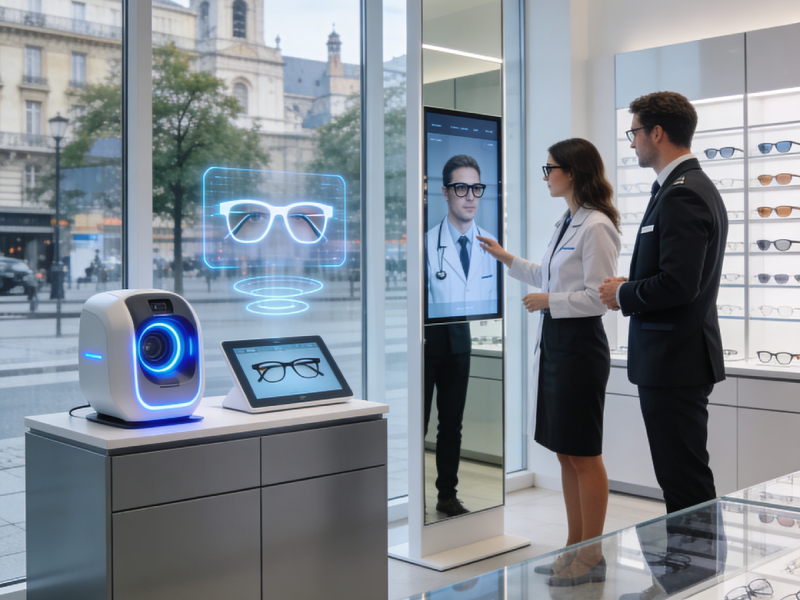
The Future of Independent Optical Retail in Europe
Trends, Challenges, and Strategic Opportunities
Independent optical retail in Europe is entering a decisive decade. Structural changes in consumer behavior, technological innovation, regulatory evolution, and competitive pressure from large chains and online platforms are reshaping the industry.
While these changes create uncertainty, they also generate significant opportunities for well-managed independent opticians. Stores that adapt strategically will not only survive but strengthen their market position.
This article analyzes the key forces shaping the future of optical retail in Europe and outlines how independent opticians can prepare for sustainable growth.
The Changing Structure of the European Optical Market
The European optical sector is experiencing gradual consolidation. Large chains and international groups continue to expand through acquisitions, franchising, and aggressive retail development.
At the same time, independent stores remain numerically dominant in many countries, particularly in Southern and Central Europe. However, competitive pressure is increasing due to:
- Rising operational costs
- Increased marketing expenses
- Higher customer expectations
- Standardization by large networks
- Expansion of online eyewear platforms
This dual structure creates a polarized market where independents must clearly define their strategic role.
Evolution of Consumer Behavior in Vision Care
Modern consumers approach eyewear purchasing differently than in the past.
Key behavioral trends include:
- Increased online research before visiting stores
- Higher sensitivity to reviews and recommendations
- Demand for transparency in pricing
- Preference for personalized service
- Growing interest in lifestyle-driven eyewear
Customers expect optical stores to combine healthcare expertise with retail professionalism.
Independent opticians that align with these expectations strengthen long-term loyalty.
Digital Transformation and Omnichannel Integration
Digitalization is becoming central to optical retail.
Future-ready independent stores integrate physical and digital channels.
Key digital priorities include:
- Mobile-optimized websites
- Online appointment scheduling
- Virtual frame browsing
- Digital patient records
- Automated recall systems
- CRM integration
Omnichannel strategies improve accessibility and operational efficiency.
Advanced Eye Care Services as Differentiation
Clinical specialization will become increasingly important.
Independent opticians are well positioned to expand into advanced services such as:
- Myopia management
- Dry eye treatment
- Sports vision optimization
- Occupational vision programs
- Specialty contact lens fitting
These services increase professional authority and reduce price competition.
Data-Driven Retail Management
Future optical retailers will rely more heavily on analytics.
Important performance indicators include:
- Patient lifetime value
- Conversion rates
- Average transaction value
- Product rotation speed
- Service utilization rates
Data enables evidence-based decision-making and reduces operational uncertainty.
Supplier Relationships and Supply Chain Resilience
Supply chain stability has become a strategic priority.
Future-oriented opticians prioritize suppliers that offer:
- Regional manufacturing capacity
- Transparent logistics systems
- Flexible minimum orders
- Stock visibility
- Long-term partnership models
Reliable supplier networks reduce vulnerability to disruptions.
Sustainability and Ethical Consumption
Environmental and social responsibility is gaining importance.
European consumers increasingly value:
- Sustainable materials
- Ethical production
- Reduced packaging
- Carbon footprint transparency
- Local sourcing
Independent opticians can differentiate by partnering with responsible manufacturers and communicating sustainability practices clearly.
Personalization and Customer-Centric Retail
Personalization will define future competitive advantage.
Advanced personalization includes:
- Individual visual profiling
- Lifestyle-based frame selection
- Customized lens solutions
- Tailored communication programs
- Predictive service reminders
Personalized care strengthens emotional engagement.
Workforce Development and Talent Retention
Human capital remains a critical success factor.
Future-ready stores invest in:
- Continuous professional education
- Digital skills training
- Leadership development
- Career progression pathways
- Performance-based incentives
Skilled teams deliver superior customer experience.
Financial Pressures and Margin Management
Margin pressure is likely to intensify.
Contributing factors include:
- Rising supplier costs
- Energy and rental increases
- Wage inflation
- Technology investments
- Marketing expenditures
Strategic financial management will be essential to maintain profitability.
Private Label and Exclusive Collections
Private label and semi-exclusive collections will grow in importance.
Benefits include:
- Higher margins
- Reduced price comparison
- Brand differentiation
- Stronger supplier partnerships
Independent opticians can leverage private label programs to enhance positioning.
Regulation and Healthcare Integration
Regulatory frameworks are evolving across Europe.
Future trends include:
- Increased clinical documentation requirements
- Data protection compliance
- Integration with healthcare systems
- Preventive vision programs
Professional governance will become more complex but also more valuable.
The Role of Physical Retail in a Digital Age
Physical stores remain essential.
However, their role is shifting from transactional spaces to experiential environments.
Future optical stores will emphasize:
- Consultation zones
- Diagnostic technology areas
- Product experience displays
- Comfortable waiting spaces
- Educational content
Experiential retail strengthens differentiation.
Competitive Response to Online Platforms
Online eyewear sellers continue to expand.
However, limitations remain in:
- Accurate refraction
- Personalized fitting
- Clinical follow-up
- After-sales care
Independent opticians can outperform online competitors by emphasizing professional services and long-term care.
Innovation in Lens and Frame Technology
Technological innovation will accelerate.
Key areas include:
- Smart lenses
- Blue-light management
- Adaptive focus systems
- Lightweight composite materials
- AI-assisted diagnostics
Staying informed about innovation supports competitive positioning.
Collaboration and Professional Networks
Collaboration among independents will increase.
Future models include:
- Buying groups
- Shared marketing platforms
- Training alliances
- Technology cooperatives
Collective action enhances bargaining power.
Building Resilient Business Models
Resilience will define long-term success.
Resilient optical businesses demonstrate:
- Diversified revenue streams
- Strong cash reserves
- Adaptive pricing structures
- Flexible cost management
- Continuous learning culture
Resilience reduces vulnerability to shocks.
Strategic Opportunities for Independent Opticians
Despite challenges, significant opportunities remain.
Key growth areas include:
- Aging population services
- Pediatric vision care
- Corporate vision programs
- Specialty eyewear niches
- Medical-technology partnerships
Strategic focus enables sustainable expansion.
Preparing for the Next Decade
Future-oriented planning requires:
- Regular strategic reviews
- Investment roadmaps
- Technology assessments
- Supplier audits
- Market monitoring systems
Structured planning reduces uncertainty.
Final Outlook: Independent Optical Retail in 2035
Independent optical retail in Europe will remain viable and valuable.
However, survival alone will not be sufficient. Success will belong to opticians who operate as:
- Healthcare professionals
- Retail strategists
- Technology adopters
- Community leaders
- Brand builders
Stores that integrate these roles will dominate local markets.
Partnering for the Future
Nea Optiki supports independent opticians with:
- Innovative collections
- Flexible supply models
- European manufacturing standards
- Professional B2B support
- Long-term partnership philosophy
Optical retailers seeking strategic partners for future growth can explore cooperation opportunities and access specialized wholesale programs.
👉 Apply for Wholesale Access
👉 Request Wholesale Catalog
Frequently Asked Questions
Will independent opticians survive in the long term?
Yes. Stores that invest in differentiation, service quality, and operational excellence remain highly competitive.
Is digital transformation optional?
No. Digital integration is becoming a minimum requirement.
What is the biggest future risk?
Failure to adapt strategically to changing consumer and technological trends.
What is the biggest opportunity?
Combining clinical excellence with personalized retail experiences.