
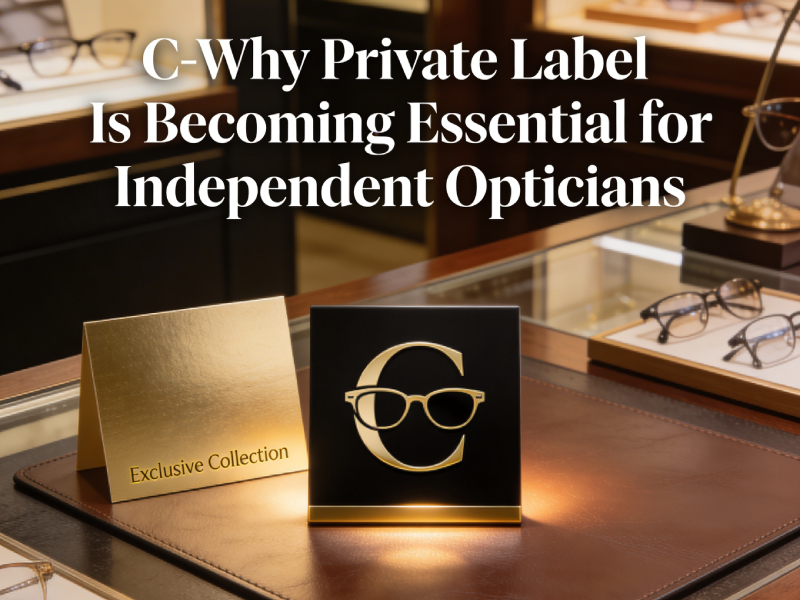
Why Private Label Is Becoming Essential for Independent Opticians
How Ownership, Control, and Differentiation Are Reshaping Optical Retail
Independent optical retail is entering a period of structural transformation. Traditional models based on reselling established brands and competing through service alone are becoming increasingly fragile. Price transparency, chain expansion, online competition, and supplier consolidation are steadily eroding the foundations of this model.
In this environment, differentiation is no longer achieved through assortment size, promotional activity, or temporary pricing tactics. It is achieved through ownership.
Private label eyewear is no longer a niche strategy. It is becoming a central pillar of sustainable independent optical retail. Stores that develop proprietary collections are gaining control over margins, positioning, and customer relationships. Those that do not are becoming progressively dependent on forces they cannot influence.
Private label is no longer optional. It is becoming essential.
The Limits of the Traditional Reseller Model
For decades, independent opticians operated successfully as distributors of third-party brands. They curated collections, delivered professional service, and relied on local reputation to retain customers.
This model worked in an environment with limited competition and low price transparency.
That environment no longer exists.
Today, the same branded frames are available in multiple stores and online platforms. Prices are easily compared. Promotions are widely visible. Brand loyalty is weakening. Supplier portfolios are converging.
When many retailers sell the same products, differentiation disappears. When differentiation disappears, price becomes the dominant variable.
Price competition is structurally unprofitable.
Price Transparency Has Changed Everything
Digital platforms have fundamentally altered purchasing behavior. Customers now research before visiting stores. They compare prices. They read reviews. They evaluate alternatives.
This transparency weakens the traditional value of branded reselling.
Even highly respected brands can be found online at discounted prices. Chains use scale to undercut independents. Marketplaces amplify price pressure.
In this environment, relying on external brands means outsourcing pricing power.
Private label restores it.
From Dependency to Strategic Autonomy
One of the most important consequences of private label development is the restoration of strategic autonomy.
When retailers rely exclusively on external brands, they depend on supplier decisions for:
Pricing policies
Product cycles
Availability
Marketing direction
Distribution strategy
These decisions are rarely aligned with the interests of individual stores.
Private label changes the relationship.
By owning the product, the retailer controls the commercial framework. Pricing becomes stable. Availability becomes predictable. Positioning becomes deliberate.
Autonomy replaces dependency.
Margin Protection in a High-Cost Environment
Operating costs in Europe are rising across all categories. Rent, wages, energy, insurance, compliance, and technology expenses continue to increase.
At the same time, price competition limits revenue growth.
This creates structural margin pressure.
Private label frames typically generate higher and more stable gross margins than third-party brands. They reduce promotional dependency and increase pricing flexibility.
Improved margins create investment capacity. Investment capacity creates competitive resilience.
Profitability is no longer accidental. It must be designed.
The End of Easy Differentiation
In the past, differentiation could be achieved simply by selecting the “right” brands. Exclusive distribution agreements, regional representation, and limited access protected uniqueness.
Those mechanisms are weakening.
Brand portfolios are becoming more standardized. Distribution is expanding. Exclusivity is rare.
As brand differentiation declines, retailer differentiation must increase.
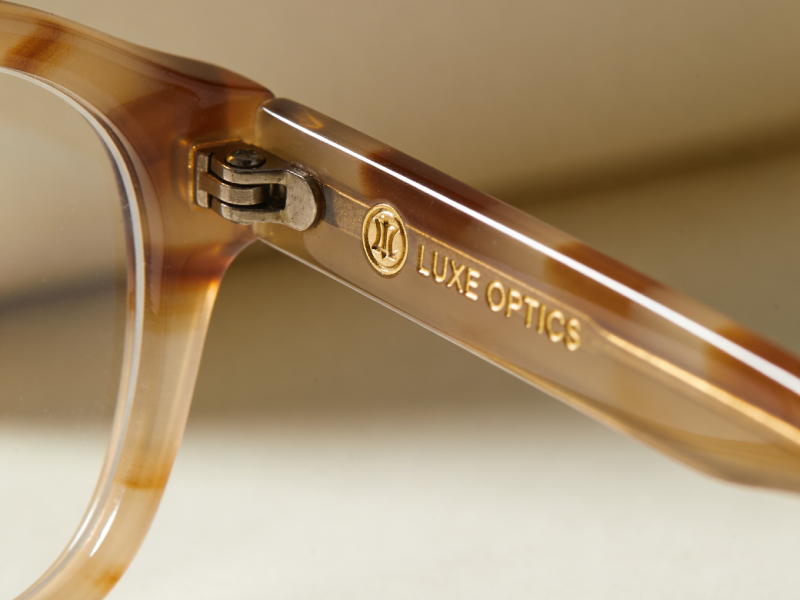
Private label provides built-in exclusivity.
No competitor can copy it directly.
Customer Loyalty Requires More Than Service
Professional service remains essential. But it is no longer sufficient on its own.
Many stores deliver competent eye care. Many provide friendly service. Many invest in equipment.
These elements are becoming minimum standards.
Loyalty now depends on emotional connection and identity. Customers remain loyal to stores they perceive as unique and meaningful.
Private label collections contribute directly to this perception. They create a tangible link between product and place.
Customers do not just buy a frame. They buy into a relationship.
Manufacturing Has Become More Accessible
Historically, private label required large volumes and high financial risk. That barrier limited adoption.
This has changed.
European and regulated manufacturers now offer low-MOQ platforms, modular designs, and flexible production systems. Prototyping is faster. Development cycles are shorter. Risk is controllable.
Private label is no longer reserved for large chains.
It is accessible to disciplined independents.
Quality Control as Brand Insurance
When a frame carries the store’s name, quality becomes a strategic issue.
Defects are not isolated incidents. They damage trust, reputation, and long-term value.
Professional private label programs emphasize material certification, batch inspection, traceability, and warranty systems. These practices protect brand equity.
Quality is not a cost.
It is insurance.
Reducing Exposure to Supplier Volatility
Supplier consolidation is increasing. Mergers, acquisitions, and portfolio changes are becoming common.
These developments often result in:
Price increases
Range reductions
Policy changes
Distribution shifts
Retailers dependent on a narrow set of brands are vulnerable.
Private label reduces exposure.
It diversifies sourcing and stabilizes supply.
Building Long-Term Brand Assets
Private label collections are assets.
They accumulate value over time through recognition, trust, and customer attachment. They strengthen enterprise valuation. They improve negotiation leverage. They enhance strategic options.
Unlike promotional campaigns, they do not expire.
They compound.
Pricing Power and Narrative Control
Branded products come with external narratives. Marketing messages, positioning, and perceived value are shaped elsewhere.
Private label allows retailers to define their own story.
They control how products are presented, what they represent, and why they matter. This narrative control supports premium pricing and reduces discount dependency.
Value is created through meaning.
Private Label as a Platform, Not a Product
Many retailers view private label as a collection of frames.
Successful ones view it as a platform.
A platform supports:
Signature collections
Sunglasses lines
Occupational eyewear
Children’s frames
Limited editions
It evolves with the business.
It becomes part of identity.
Common Misconceptions
Some retailers hesitate because of misconceptions.
Private label is not only for large stores.
It does not require massive capital.
It does not replace branded assortments.
It does not require design expertise.
With the right partners, risk is manageable.
Inaction is often riskier than action.
Integration with Wholesale Strategy
Private label works best when integrated into a broader sourcing strategy.
Professional suppliers support hybrid models that combine branded collections with proprietary lines. This balance provides stability and differentiation.
Isolated private label projects often fail. Integrated programs succeed.
The Competitive Divide
The optical market is becoming polarized.
On one side are retailers building proprietary assets, digital systems, and strong brands. On the other are stores dependent on external brands and reactive pricing.
The gap between these groups is widening.
Private label is a major dividing line.
Long-Term Implications for Independent Opticians
Over the next decade, independent opticians will not disappear. But their profile will change.
Successful stores will operate as:
Healthcare providers
Retail strategists
Brand owners
Data-driven managers
Community leaders
Private label supports all these roles.
It is infrastructure, not decoration.
Strategic Readiness
Launching private label requires readiness.
Key prerequisites include:
Clear positioning
Reliable suppliers
Basic financial discipline
Staff engagement
Long-term commitment
Without these elements, projects remain superficial.
With them, they become transformative.
Supporting Private Label Development
Nea Optiki supports independent opticians through low-MOQ private label programs, European manufacturing partnerships, design and prototyping support, branding services, and professional project management.
Retailers seeking to build sustainable proprietary eyewear lines can explore structured cooperation models designed for long-term growth.
👉 Request Private Label Consultation
👉 Access Development Programs
Final Perspective
Private label is not a trend.
It is a structural response to changing market economics.
It restores control.
It protects margins.
It strengthens loyalty.
It builds assets.
In an increasingly competitive environment, ownership is becoming the ultimate differentiator.
Independent opticians who understand this early will shape their future.
Those who ignore it will adapt later—under pressure.